The case known as brown v board of education is one of the most important decisions in the history of the United States Supreme Court. It changed the direction of American education, civil rights, and equality under the law.
Before this case, public schools in many states were divided by race. White students and Black students attended separate schools. Even though the law claimed these schools were “equal,” in reality, Black schools were often underfunded, overcrowded, and poorly equipped.
This unfair system was challenged in court, leading to a historic decision in 1954 that changed the country forever.
The importance of brown v board of education is not only legal—it is also social and moral. It marked a turning point in how America understands fairness, education, and human rights.
What is brown v board of education?
The brown v board of education summary is simple:
In 1954, the U.S. Supreme Court decided that racial segregation in public schools is unconstitutional. This means separating children based on race in schools violates the U.S. Constitution.
The Court ruled that “separate educational facilities are inherently unequal,” which means segregation itself creates inequality, even if schools look similar on the surface.
This decision officially ended the legal basis of school segregation in America.
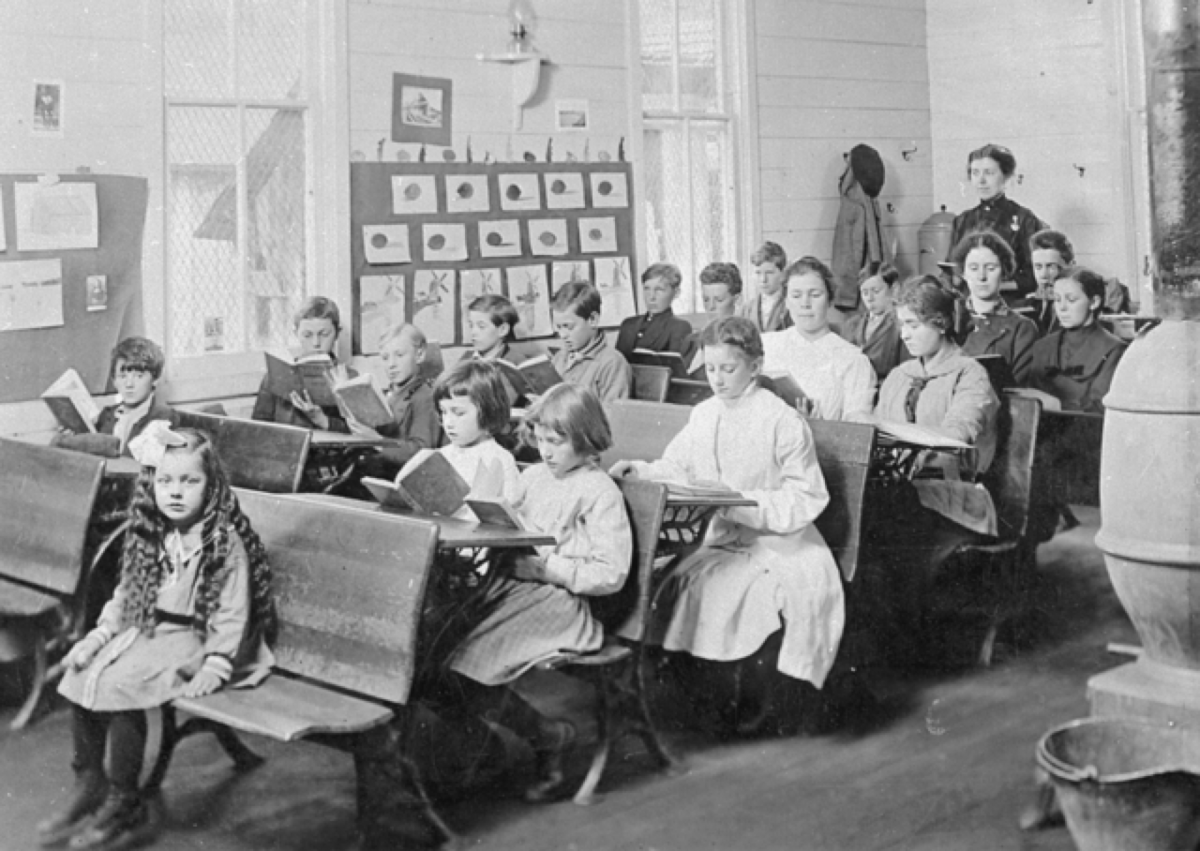
When was brown v board of education decided?
A very common question is: when was brown v board of education decided
The answer is:
- Main decision: May 17, 1954
- Follow-up ruling (Brown II): 1955
The 1954 ruling declared segregation unconstitutional, while the 1955 ruling addressed how schools should begin desegregation.
Also Read:Higher Education News Today: Latest Updates, Trends & US College Changes 2026
Historical Background: Segregation Before the Case
To understand brown v board of education, we must look at the system before it.
After the Civil War ended in 1865, slavery was abolished. However, racial discrimination continued through laws called Jim Crow laws, mainly in Southern states.
These laws enforced separation in almost every public space:
- Schools
- Transport
- Restaurants
- Drinking fountains
- Public buildings
This system was justified using the idea of “separate but equal,” established in the 1896 Supreme Court case Plessy v. Ferguson.
But in real life, equality did not exist.
Black schools often had:
- Old and broken buildings
- Fewer books and supplies
- Lower teacher salaries
- Overcrowded classrooms
This inequality created long-term educational disadvantages.
The Legal Foundation: Plessy v. Ferguson
Before brown v board of education, the key legal rule was:
“Separate but equal”
This came from the Supreme Court decision in 1896. It said segregation was legal as long as facilities were equal.
But this rule was flawed because:
- Equality was never truly provided
- States spent less money on Black schools
- Segregation created social and psychological harm
This legal structure remained in place for nearly 60 years until it was challenged in court.
Role of NAACP and Civil Rights Lawyers
A major force behind brown v board of education was the NAACP (National Association for the Advancement of Colored People).
The NAACP Legal Defense Fund, led by Thurgood Marshall, built a legal strategy to challenge segregation step by step.
Instead of attacking all segregation at once, they focused on education first because:
- Schools affect children’s future
- Education is a basic right
- Inequality in schools was clearly visible
This strategy led to multiple cases being combined into one Supreme Court case.
The Five Cases Combined into brown v board of education
The case was not just one lawsuit. It included five major cases:
- Brown v. Board of Education (Kansas)
- Briggs v. Elliott (South Carolina)
- Davis v. County School Board (Virginia)
- Gebhart v. Belton (Delaware)
- Bolling v. Sharpe (Washington D.C.)
Each case involved Black families fighting against school segregation.
These cases were grouped together because they all raised the same constitutional question:
Is racial segregation in public schools legal under the U.S. Constitution?
Supreme Court Arguments and Evidence
In court, lawyers against segregation argued that:
- Segregation harms children psychologically
- It creates a sense of inferiority
- It violates equal protection under the 14th Amendment
- Separate schools are never truly equal
A key piece of evidence came from psychology experiments known as the doll tests, which showed that segregation negatively affected Black children’s self-esteem.
On the other side, states argued:
- Segregation was legal under tradition
- Schools were “equal enough”
- The Constitution did not forbid separation
However, the Court focused on real-world impact instead of theory.
The Supreme Court Decision (1954)
Also Read:Parental Opt-Out Rights in Education: Laws, Benefits & Step-by-Step Process (USA 2026)
On May 17, 1954, the Supreme Court made a unanimous decision.
Chief Justice Earl Warren wrote the ruling.
The Court stated:
“Separate educational facilities are inherently unequal.”
This sentence became one of the most important legal statements in U.S. history.
The Court ruled that segregation in public education violates the 14th Amendment’s Equal Protection Clause.
This overturned the legal foundation of school segregation.
Brown II (1955): Slow Implementation
In 1955, the Court issued another decision known as Brown II.
It ordered schools to desegregate with “all deliberate speed.”
However, this phrase was unclear and led to delays.
Many states:
- Refused to integrate schools
- Created new barriers
- Delayed court orders for years
This meant that legal change did not immediately lead to social change.
Resistance After the Decision
Even after the ruling, many states resisted.
Examples include:
- Closing public schools
- Creating private segregation academies
- Blocking Black students from entering white schools
- Using political and legal delays
One famous event was in Little Rock, Arkansas, where nine Black students had to be protected by federal troops to attend school. These students became known as the Little Rock Nine.
Impact of brown v board of education on Schools
The impact of brown v board of education was long-lasting.
Positive changes included:
- More integrated schools over time
- Better access to education for Black students
- Increased federal involvement in education equality
- Improved awareness of civil rights
However, full equality was not achieved immediately, and some inequalities still exist today.
Connection to the Civil Rights Movement
This case became a foundation for the Civil Rights Movement.
It inspired:
- Montgomery Bus Boycott
- Civil Rights Act of 1964
- Voting Rights Act of 1965
- March on Washington
Leaders like Martin Luther King Jr. used the decision as proof that legal change was possible.
Legal Importance and Constitutional Impact
The case changed how courts interpret the Constitution.
Key legal impacts:
- Equality must be real, not just written
- Psychological harm matters in law
- Courts can overturn past decisions
- Education is a protected civil right
It also strengthened the role of the Supreme Court in protecting individual rights.
Modern Relevance: Is Segregation Fully Gone?
Legally, segregation is banned. But in practice, some inequality still exists due to:
- Housing patterns
- Economic differences
- School district boundaries
- Funding gaps
This is called de facto segregation, meaning segregation by circumstance, not law.
So the legacy of brown v board of education is still relevant today.
Key Insights (Deep Understanding)
The deeper meaning of this case is not only legal—it is human.
It shows that:
- Laws must reflect fairness in real life
- Education shapes opportunity
- Inequality can exist even without written discrimination
- Social change requires both law and action
This case is a reminder that justice is a continuous process, not a single event.
Also Read:Bjudlunch: Meaning, Culture, and Business Use Explained Clearly
FAQs about brown v board of education
What is brown v board of education in simple words?
It is a Supreme Court case that ended racial segregation in public schools in the United States.
Why is brown v board of education important?
It declared that segregated schools are unconstitutional and started school integration.
What was the main outcome?
The Court ruled that “separate but equal” does not apply in education.
Did schools integrate immediately?
No, many states resisted for years.
Who led the case?
Thurgood Marshall and the NAACP Legal Defense Fund.
What amendment was used?
The 14th Amendment.
What is its legacy today?
It continues to influence education equality and civil rights law.
Conclusion
The case of brown v board of education is one of the most powerful moments in American history. It changed not just the law, but also society’s understanding of equality.
It proved that separate is not equal and that justice must include real opportunity for all children.
Even today, its message remains important: education should be fair, equal, and open to every child regardless of race.

